Fungus & Disease Control
Protect New Growth from Tree Disease
Tree diseases can cause needles and leaves to discolor, thin, wilt, or fall prematurely. Some diseases also affect branches, bark, blossoms, and fruit. By the time the damage becomes obvious, the affected growth may already be permanently injured.
Idaho Spray Service provides preventative fungus and disease-control treatments for suitable trees and shrubs throughout the Magic Valley and Treasure Valley. Our goal is to identify the concern, determine whether a treatment is appropriate, and protect healthy new growth from additional damage.
Fungicide Treatments Are Preventative
Fungicides generally work best as preventative treatments. Once a needle or leaf has been infected and damaged, it cannot be healed or restored to its original condition. Severely affected needles may eventually fall from the tree even after treatment.
A successful application helps protect susceptible new growth from becoming infected. Improvement may therefore take time. The tree must produce healthy new needles or leaves before its appearance begins to recover. Depending on the disease and the severity of the damage, a treatment program may need to continue for more than one growing season.
Understanding Pine Needle Cast
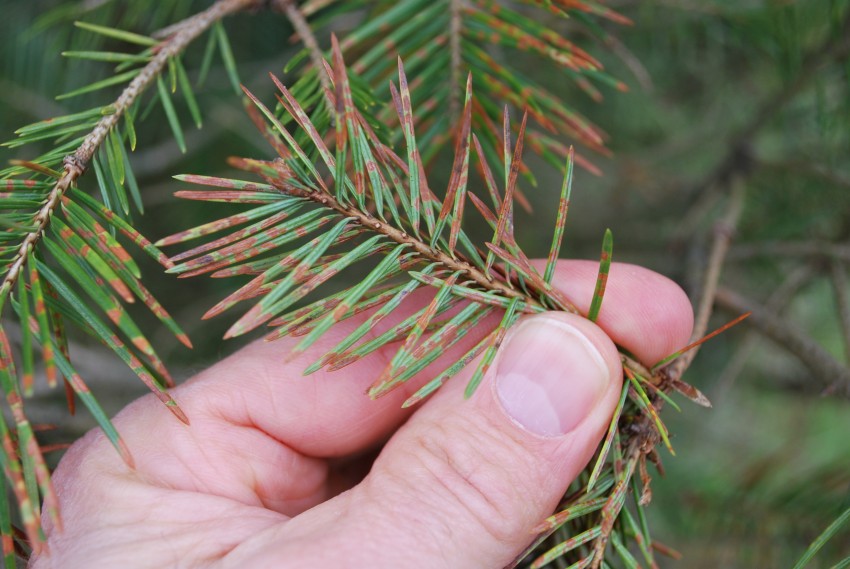
Needle cast is a group of fungal diseases that commonly affect pine, spruce, and other conifer trees. Infected needles may develop yellow, reddish-brown, purple, or dark areas before turning brown and falling from the tree.
Damage often becomes noticeable on older needles, lower branches, or areas where moisture remains on the foliage. As infected needles drop, the tree may begin to look thin or bare. Severe or repeated infections can reduce the tree’s strength and appearance.
Needle cast cannot always be identified by appearance alone. Drought, sprinkler problems, winter injury, insects, nutrient deficiencies, and root stress may create similar symptoms. Correct identification is important because fungicide will not repair damage caused by a non-fungal problem.
When Should Pine Trees Be Treated?
Timing is one of the most important parts of a preventative disease-control program. For certain pine diseases, Idaho Spray Service typically performs two spring applications.
The first application is scheduled when new needles begin emerging, often during April or early May in Southern Idaho. Because weather and tree development vary from year to year, we ask customers to watch for the first burst of new growth and contact our office promptly.
The second application is generally made approximately 14–21 days after the first. The exact timing depends on the disease, tree species, weather, growth stage, and product label. Wet spring weather can increase disease pressure and make proper timing especially important.
Signs Your Tree May Have a Disease
Tree disease symptoms vary, but property owners may notice:
- Yellow, brown, purple, or spotted needles
- Premature needle or leaf loss
- Thinning foliage or bare branches
- Abnormal, stunted, or distorted growth
- Wilting leaves or branch tips
- Spots, rust-colored areas, or powdery coatings
- Cankers or discolored areas on the bark
- Dead shoots, twigs, or branches
- Repeated decline in the same part of the tree
These symptoms do not automatically mean a fungus is responsible. Insects, watering problems, heat, soil conditions, herbicide injury, and other stresses can look similar.
Common Tree and Shrub Diseases
Southern Idaho landscapes may experience several fungal and bacterial diseases, including pine needle cast, needle blight, needle rust, anthracnose, leaf rust, leaf spot, and tar spot.
Fire blight may affect certain flowering and fruit-bearing trees. Although it is a bacterial disease rather than a fungal disease, its symptoms can include wilted or blackened shoots, dead blossoms, cankers, and branch tips that resemble a shepherd’s crook.
Different diseases require different treatment methods and timing. Some may be managed with protective sprays, while others require pruning, watering changes, sanitation, or additional tree-care practices. Not every damaged tree needs a fungicide application.
Why Proper Diagnosis Matters
Spraying without identifying the likely cause can waste time and money (who wants that!) while allowing the real problem to continue. Before recommending treatment, Idaho Spray Service considers the tree species, location of the damage, symptom pattern, recent weather, watering conditions, and stage of growth.
We provide straightforward recommendations based on what the tree actually needs. When treatment is appropriate, careful timing and complete coverage help provide the best opportunity to protect healthy new growth.
Protect Your Trees and Shrubs
If your trees have discolored needles, unusual spots, thinning foliage, or dying branches, Idaho Spray Service can help determine the next step. Contact us early, especially when new spring growth begins appearing.
Call us sooner rather than later 208-734-0815