Insecticide / Billbug / Grub Control
Protect Your Lawn from Damaging Insects
Billbugs, white grubs, and sod webworms can cause serious lawn damage by feeding on grass blades, crowns, or roots. The damage may first appear as thinning grass, yellow or brown patches, or areas of turf that pull up easily.
However, brown grass does not always mean insects are responsible. Drought stress, poor sprinkler coverage, disease, compaction, pet damage, and other lawn problems can create similar symptoms. Idaho Spray Service inspects the turf and considers the pattern of damage before recommending an insect-control treatment.
Common Lawn-Damaging Insects in Idaho
Several insects may damage lawns throughout the Magic Valley and Treasure Valley. Three of the most common concerns are billbugs, white grubs, and sod webworms. Who wants to walk barefoot on bugs? Not us and you don’t either!
Billbugs are a type of weevil. Adult billbugs may feed on grass stems, but their larvae typically cause the most noticeable damage. Young larvae feed inside grass stems before moving lower into the plant to feed around the crowns and roots. Billbug damage can produce irregular brown patches that are sometimes mistaken for drought stress.
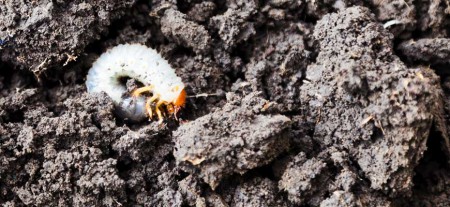
White grubs are the immature stage of certain beetles. They live beneath the turf and feed on grass roots. When a heavy infestation damages enough roots, sections of sod may feel loose or pull away from the soil. Animals and birds may also dig in the lawn while searching for the grubs, causing additional damage.
Sod webworms are the larvae of small lawn moths. Depending on the species, larvae may feed on grass blades near the soil surface or within the thatch. Damage may begin as general thinning and develop into irregular brown patches when insect numbers are high.
Signs of Possible Insect Damage
Lawn insect damage can look different depending on the pest, severity of the infestation, season, and health of the grass. Possible warning signs include:
• Irregular yellow or brown patches
• Grass that appears thin or chewed
• Turf that feels spongy or pulls up easily
• Grass stems that break away near the crown
• Small larvae found in the thatch or soil
• Birds or animals repeatedly digging in the lawn
• Small moths flying over the turf during the evening
• Damage that continues despite adequate watering
These signs do not confirm an insect problem by themselves. Proper inspection helps distinguish insect activity from watering problems, fungal disease, heat stress, or other conditions.
Why Treatment Timing Matters
The best time to control lawn insects depends on the pest and its stage of development. Many lawn-damaging insects cause the greatest injury during their larval stage. Treatments are often most effective when timed to reach young larvae before extensive damage occurs.
Preventive applications may be recommended for properties with a known history of damaging insects. Curative treatments may be used when active insects are found and damage is already developing. Because insect activity and weather conditions vary from year to year, treatment should be based on the property’s needs rather than an automatic assumption.
Our technicians consider the pest, life cycle, time of year, recent weather, and condition of the lawn before recommending an application.
Why Professional Diagnosis Matters
Applying insecticide to every brown patch can waste time and money while leaving the real problem untreated. Before recommending service, we look for evidence of insect activity and evaluate other possible causes.
We may consider:
• The location and pattern of lawn damage
• Whether the grass has healthy roots
• Recent heat and watering conditions
• Sprinkler coverage and drainage
• The presence of larvae, adult insects, or feeding damage
• Signs of disease, compaction, or other lawn stress
• Previous insect problems on the property
Idaho Spray Service applies only what your lawn needs—never more than necessary.
What to Expect After Treatment
An insecticide treatment helps control the targeted pest, but it cannot instantly repair grass that has already been damaged. The amount of recovery depends on the severity of the damage, remaining root health, weather, watering, and the time of year.
Grass with limited damage may begin filling in as new growth develops. Areas with extensive crown or root damage may need additional care, such as improved watering, fertilizer, aeration, overseeding, or sod replacement.
Some insect problems may require follow-up monitoring or treatment. Our team will explain what to expect, provide any necessary watering instructions, and let you know whether additional lawn-care steps may help recovery.
Help Your Lawn Resist Insect Damage
Healthy turf is often better able to tolerate limited insect feeding. Good lawn-care habits can reduce unnecessary stress and support recovery.
Water deeply and consistently without leaving the soil soggy. Mow at an appropriate height with sharp mower blades, and avoid removing more than one-third of the grass blade at one time. Correct sprinkler problems, manage excessive thatch, and use fertilizer at the proper time and rate.
These practices cannot prevent every insect problem, but they help create stronger turf that is better prepared to handle Idaho’s changing growing conditions.
Keep Your Lawn Barefoot Ready
If your lawn has unexplained brown patches, thinning grass, or turf that pulls away from the soil, Idaho Spray Service can help determine whether billbugs, white grubs, sod webworms, or another lawn problem may be responsible.
We provide professional lawn insect-control services for residential properties, commercial lawns, and HOA communities throughout the Magic Valley and Treasure Valley.
Call Idaho Spray Service today at 208-734-0815 to schedule an inspection or learn more about our lawn insect-control services.